
eagerexplorer
“All journeys have secret destinations of which the traveler is unaware.” – Martin Buber
Takayama Jinya: A Detour
Trying our best to avoid the sudden rain, we sought refuge to the nearest tourist attraction, Takayama Jinya. It was the only place I could think of where we could spend some considerable time since the heavy downpour didn’t seem to be going away soon.
From Sanmachi Suji, it was a short walk to Takayama Jinya. The city’s iconic red bridge could soon be seen, standing high above the raging Miyagawa River. The other morning market was soon in view, implying that we were almost at our destination. With the risk of getting soaked imminent, there was no time to peruse this other market, and so we headed straight towards the gate of our destination.

Takayama Jinya
Takayama Jinya was a government office, and served as an official residence on occasion, during the Edo Period. Now serving as a museum, it provided us a glimpse not only of how official transactions were held, but also of how these public servants and their families lived.
As was typical of Japanese houses, shoes had to be left out prior to entering the premises. A small area of sand was decorated as though it consisted of many fans: a design that was repeated on a wall at the entrance.

Hanamochi by the entrance
Tatami mats occupied most of the flooring–it was my first time to step on tatami mats; it was soft but firm at the same time. The ceiling was quite low, hence it was a bit dark except for the light coming from the outside. Shouji screen doors separated one room from the next and also kept the outside from the interior. Some of these sliding doors framed the garden beautifully, providing an instant contrast to the monotonous grids and lines were featured in most of the space. As the showers continued outside, many visitors seated themselves on the wooden corridor that transitioned the outdoors to the inside areas in order to admire the lush garden.

Japanese architecture

Shouji screens
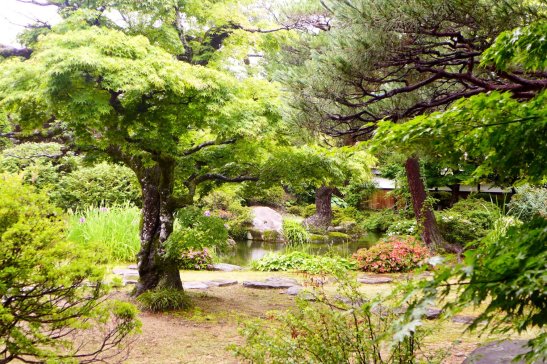
Garden with azaleas in bloom
The biggest room was where official business took place, while many smaller rooms were used as residence. The traditional Japanese alcove where a scroll was hung and a seasonal decor was placed was present in most of the living quarters. A space was allocated for a kettle in the area where tea ceremony was held: the only semblance of life in this otherwise minimalist space. The kitchen exhibited various implements for cooking and dining. In this area, beams were exposed, showing the woodwork that Takayama craftsmen were famous for.
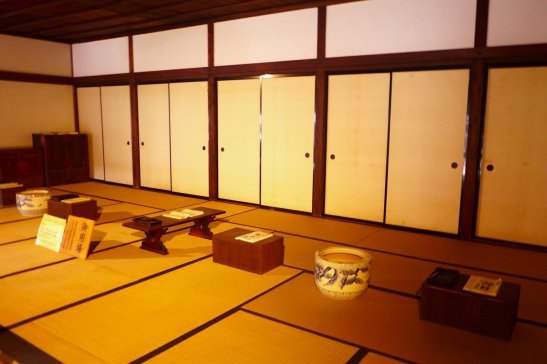
A room for official business
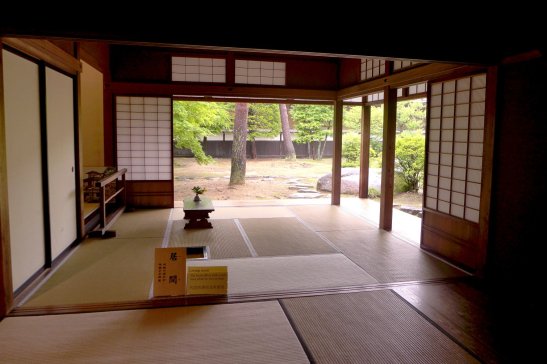
A typical Japanese room

More greenery
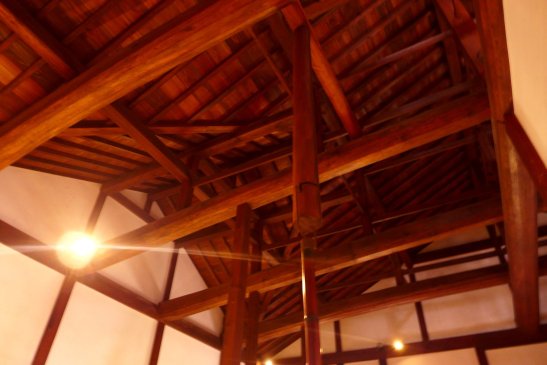
Wooden beams


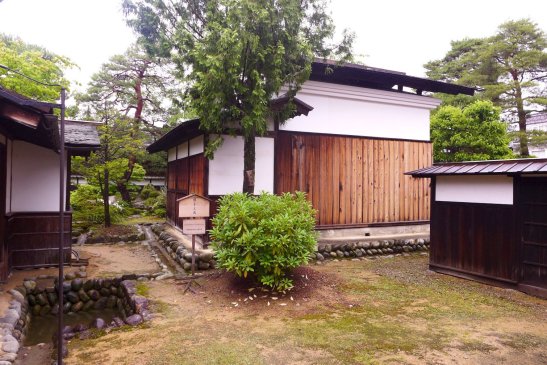
Nestled in the garden
As we headed to the granary, a portion was allocated to demonstrate how interrogation (in the form of torture?) and punishment were carried out in the olden times.
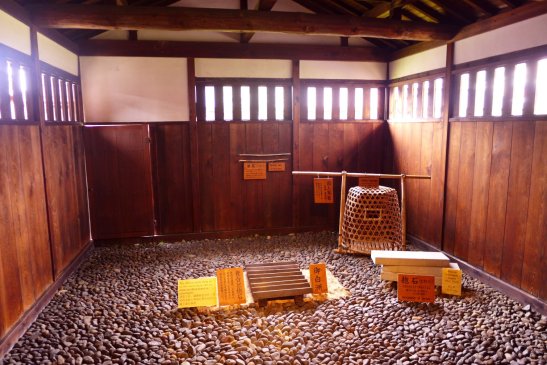
Interrogation room
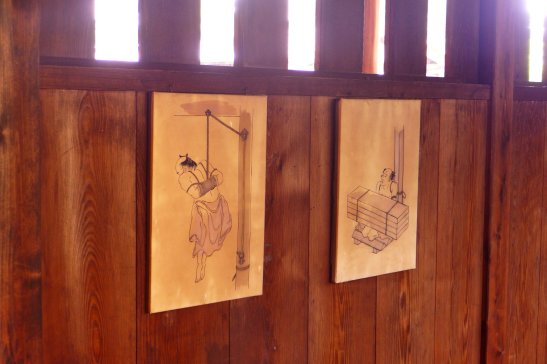
Punishment on display
More cultural artifacts were displayed in the granary (but photos were not allowed to be taken), allowing us to take a glance into life centuries ago. A samurai armor took the spotlight, while several kimonos on display played the supporting role. A large stack of rice in native basket bags also showcased how taxes were historically paid, which appeared more like an installation art rather than a fiscal collection. While I initially thought that the storehouse was a quick peek, it actually took some considerable time to explore. Finally, we concluded our visit. It was an unexpected delight, as I never thought we’d have the time to discover this place. Japanese traditional architecture was truly mesmerizing, especially when it synergized indoor and outdoor living.
As the rain somehow subdued, it was time to head back to Sanmachi Suji. More on Takayama next time. Happy (virtual) travels!

 eagerexplorer